
Two sheds can sit side by side on a dealer’s lot, the same size and close in price. The difference shows up after the first wet spring, when one still smells like fresh lumber and the other smells like a damp basement, with mouse droppings in the corner.
Much of that difference is decided before the shed ever reaches your yard. The way the floor is built and where the shed sits both play a part. After that, it comes down to a few simple habits.
Quick Answer
A shed that stays dry and pest free usually has a treated floor raised off the ground, vents that let damp air escape, doors that close tight, and a level, well-drained spot to sit on. After delivery, keeping stored items off the floor and food sealed away does most of the work.
Why Moisture and Pests Usually Arrive Together
Damp air and pests feed off each other. Moisture softens cardboard, rusts tools, and grows mildew on fabric. It also gives mice and insects the water they need. Add a quiet, sheltered space and a forgotten bag of birdseed, and a shed has everything a mouse is looking for.
The good news is that one set of habits handles both problems.
What to Compare Before You Buy
When you look at sheds on a lot or online, these are the details that matter most for moisture and pests. Not every listing shows them, so they make good questions for the dealer.
The floor and what holds it up
The floor sits closest to the ground, where moisture collects. Ask whether the floor and the runners underneath are pressure-treated, and whether the building sits up off the ground on skids or runners. A raised floor lets air pass underneath instead of trapping damp soil against the wood.
Siding and trim
Engineered wood, painted wood, and metal siding all handle moisture differently. Ask what the siding is made of, how it is finished, and whether it carries its own warranty. Look closely at corners and trim, where gaps tend to show up first.
Vents
A shed without vents traps the moisture that builds up inside. Ask whether the building has gable vents, a ridge vent, or both, and whether they come standard or cost extra. Vents should have screens so they let air in without letting insects in.
Doors and thresholds
Close the doors and look for daylight around the edges and along the bottom. A tight fit, weatherstripping, or a door sweep keeps out rain, drafts, and small animals.
The roof
A roof with a good overhang sends rain away from the walls. If you are looking at a metal roof, ask whether it comes with a barrier underneath to reduce condensation, since metal can drip on cool mornings when the air inside is warm and damp.
Prepare the Spot Before Delivery
Even a well-built shed has problems on a soggy, uneven spot. A little planning before delivery day saves trouble later.
- Pick higher ground. Avoid low spots where water pools after a storm.
- Make it level. An uneven base can twist the frame, so doors stop closing tight and gaps open up.
- Choose a base that drains. A gravel pad is a common choice because water runs through it instead of sitting under the floor. Our guide to preparing a foundation for a prefab building walks through the options.
- Leave room around the walls. Keep the shed a little away from fences, trees, and shrubs so air can move and you can reach every side.
- Plan for delivery access. Ask the dealer how much clearance their truck or equipment needs to place the building.
Habits That Keep It Dry After Delivery
Once the shed is in place, these routines keep it in good shape.
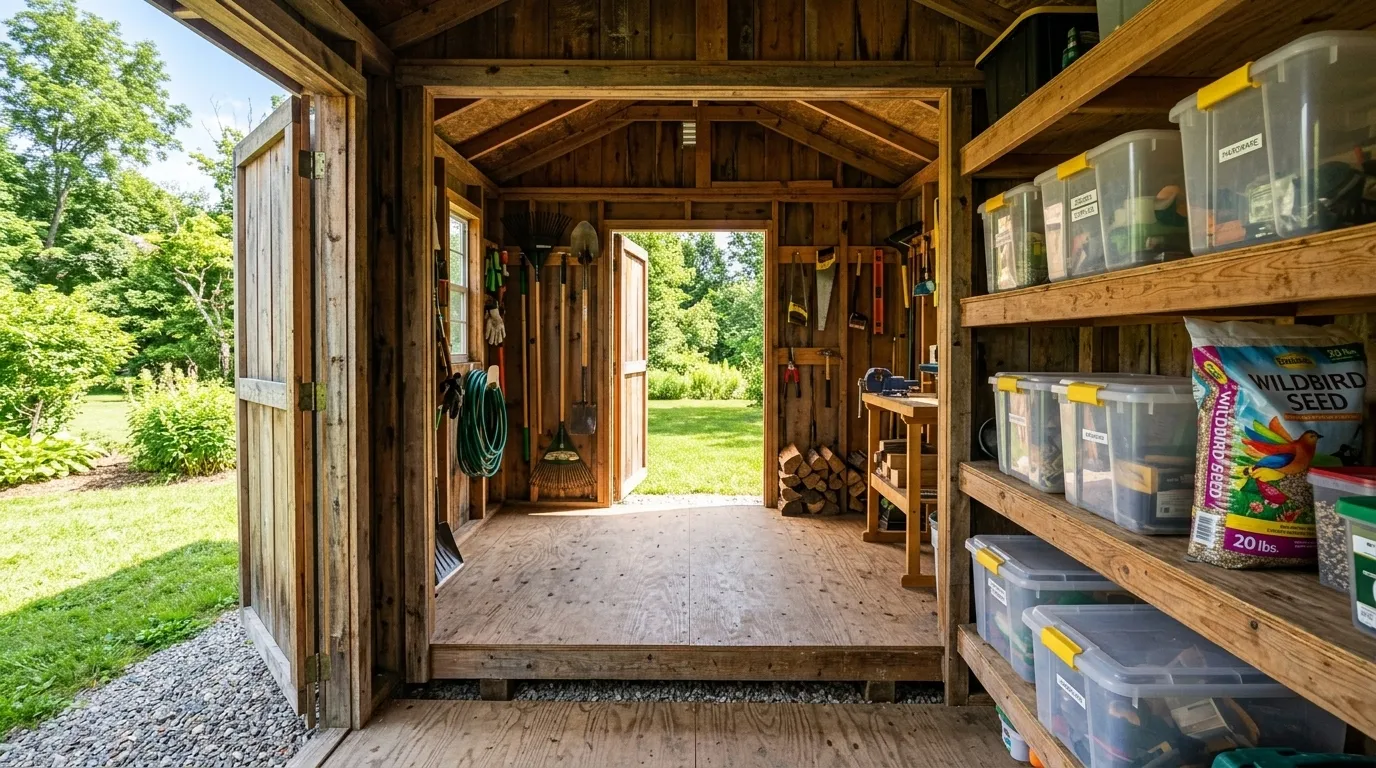
- Store things off the floor. Shelves, wall hooks, and pallets let air move under stored items and make problems easier to spot.
- Seal anything edible. Birdseed, grass seed, pet food, and garden bulbs belong in metal or heavy plastic bins with tight lids.
- Trim plants and clear debris. Tall grass, leaf piles, and firewood stacked against the walls hold moisture and give pests cover.
- Air it out on dry days. Open the doors for a few hours when the weather is dry and breezy, and close them before evening.
- Check the gaps twice a year. Look along door edges, corners, and anywhere something was added after delivery. Small gaps are easy to fill with steel wool or hardware cloth.
- Use traps before poison. If mice do get in, traps are a safer first choice, especially around children and pets.
If you plan to finish the inside as a studio or office, moisture control matters even more. Our article on how to insulate a studio shed covers vapor barriers and airflow.
What Shed Warranties Usually Cover
Most shed warranties cover how the building is made and the materials it is made from. Damage from weather, moisture, mold, pests, or ground that settles is usually not covered, which is why the habits above matter.
Warranties differ by manufacturer, so read the terms before you buy. Ask how long the coverage lasts, what voids it, such as adding wiring or cutting new openings, and who handles repair requests: the dealer, the manufacturer, or both.
Questions to Ask the Dealer
Bring this short list when you compare sheds:
- Is the floor pressure-treated, and is the building raised off the ground?
- Does it have vents, and do they come standard?
- What is the siding made of, and does it have its own warranty?
- Is there a condensation barrier under a metal roof?
- What base do you recommend for my yard?
- What does the warranty cover, and who do I contact if something goes wrong?
Frequently Asked Questions
Should a shed sit directly on the ground?
It is better if it does not. A shed raised on skids or runners over a level, well-drained base lets air move underneath and keeps the floor from sitting on damp soil.
Do small sheds need vents?
Yes. Moisture builds up in small sheds too, especially when they hold damp mowers, garden tools, or wet gear. Even one or two screened vents help.
Why does my metal shed roof drip on the inside?
That is usually condensation, not a leak. Warm, damp air meets the cool metal and turns to water. Better airflow often helps, and some buildings come with a barrier under the roof to reduce it. Water that shows up after rain, whatever the temperature, could be a leak and is worth reporting to whoever handles repairs.
Does a shed warranty cover mold or pest damage?
Usually not. Most warranties cover workmanship and materials, not damage from moisture, mold, or pests. Check the specific warranty for the building you choose.
Compare Sheds Near You
When you are ready to compare, search sheds for sale by ZIP code to compare sizes, styles, and prices, or find a dealer near you and bring your list.
Still deciding on size? Enter what you plan to store in SpaceFit to see which sizes fit, or read how to choose a portable shed size. Weighing a shed against a storage unit? The True Cost calculator compares buying a shed with renting a storage unit over time.