
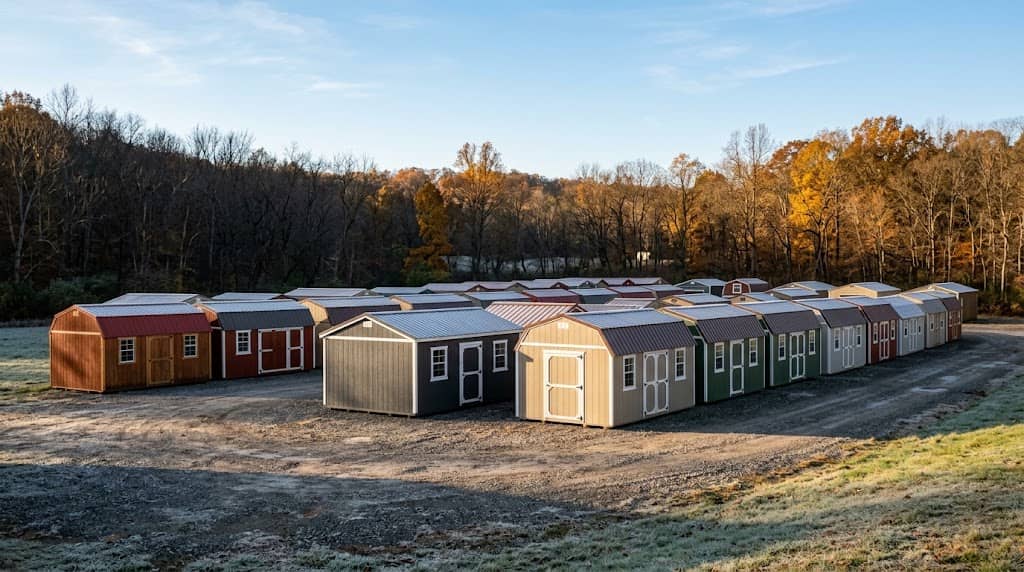
There is no single day when every shed goes on sale. Prices, inventory, and delivery times all shift through the year, and they do not shift the same way everywhere. A buyer in Michigan and a buyer in Alabama face very different winters.
Still, a few patterns hold almost everywhere, and knowing them can save you money.
Quick Answer
Late fall and winter, roughly November through February, are often the best time to buy a shed. With fewer shoppers, dealer lots tend to be fuller, many manufacturers run discounts, and a building that has sat for a while may have some room in the price. Spring is the opposite: the most buyers, the most competition for popular sizes, and the longest waits for custom orders.
Why Shed Prices and Stock Change With the Seasons
Most sheds are bought when people are working outside. Demand climbs in spring, stays steady through summer, and drops off as the weather cools. Dealers stock their lots for the busy months, so buildings that do not sell by fall may still be waiting in winter.
Weather plays a part too. Snow, ice, heavy rain, and spring thaws can all delay a delivery, and the timing depends on where you live. In colder states, winter can slow deliveries for a few days at a time. In warmer states, deliveries continue nearly all year, but storm season can shift a date.
Season by Season
- Spring: the most buyers and the most competition. Popular sizes sell quickly, and custom orders can take longer.
- Summer: steady demand and dry ground for delivery, but in-stock choices may be thinner after the spring rush.
- Fall: buyers thin out. A good time to measure your space, set a budget, and start watching listings.
- Winter: the fewest buyers. Lots are often fuller, manufacturer discounts are common, and there may be more room to talk price. It is a good time to look for repos, too.
How to Shop the Off-Season on Sheds.store
Sheds.store lists in-stock sheds from local dealers, so you can compare buildings from more than one lot and more than one manufacturer in one place.
- Search near your ZIP code. Start on the sheds for sale page and enter your ZIP code to see what is available nearby.
- Sort by price. Choose “Price: low to high” to see the lowest-priced buildings first.
- Compare the same size and style. Prices only compare fairly between buildings of the same size, style, and features.
- Look for current discounts. Many manufacturers run discounts in the winter months, and some dealers note them right in the listing title.
- Read the listing details. Each listing shows payment options, delivery terms, and whether a warranty is included.
- Sort by newest. Inventory changes throughout the year, so check back now and then to see what has just been listed.
Used and Repo Sheds: What to Check
The New and Used filters let you look at each separately. Used buildings include repos, which are buildings returned to a dealer after a rent-to-own agreement ended early. They are often priced below new and can appear in any season, though winter is a good time to look. Some dealers keep a list of buyers to contact when a repo comes in, so it is worth asking. Before you buy one:
- Look at the floor, roof, doors, and windows in person if you can.
- Ask how old the building is and why it is being sold.
- Ask about the warranty. Warranty terms for used and deeply discounted buildings vary by manufacturer, and some are sold as-is. Use the Warranty filter to see which listings include one.
Paying in Cash or Through Rent-to-Own
Many dealers offer rent-to-own, which lets you take delivery now and pay over time, often with no credit check. Others offer a short same-as-cash period. If you are deciding between paying up front and paying monthly, the True Cost calculator shows what each option costs over time. If you are weighing a shed against renting storage, see Shed vs. Storage Unit: What Each Costs Over Five Years.
Measure Before You Shop
A good price only helps if the building fits. Before you start comparing listings, use SpaceFit to see which shed sizes fit your space and your stuff. Then check with your local building department and homeowners association about permits and setback rules, since those can limit the size or placement of a shed.
Frequently Asked Questions
What month is the best time to buy a shed?
For many buyers, November through February. Fewer people are shopping, and more buildings tend to be on dealer lots. The best month for you also depends on your local weather and how soon you need the space.
Are sheds cheaper in winter?
Often. Many manufacturers run discounts during the winter months, and slower months can mean more room to negotiate on buildings that have been on a lot for a while. Sorting listings by price makes it easy to spot them.
When do repo sheds show up?
Repos return to dealers throughout the year as rent-to-own agreements end. There is no set season, but winter is a good time to look, and checking listings regularly is the best way to find one.
Can a shed be delivered in winter?
In most areas, yes. Snow, ice, heavy rain, or soft ground can delay a delivery by a few days, but a quiet season can also mean a shorter wait. The exception is a building too large to deliver, which has to be built on your property. Those are harder to schedule in winter. Ask the dealer what to expect where you live.
Is it better to buy a shed in stock or order a custom one?
An in-stock shed is the fastest option, often delivered within a couple of weeks. A custom order takes longer but lets you choose the exact size and features. If you plan to order custom, ordering in fall or winter can help you avoid the spring wait.
Compare Sheds Near You
When you are ready, browse sheds for sale near you, sort by price, and see what local dealers have on their lots this week.