
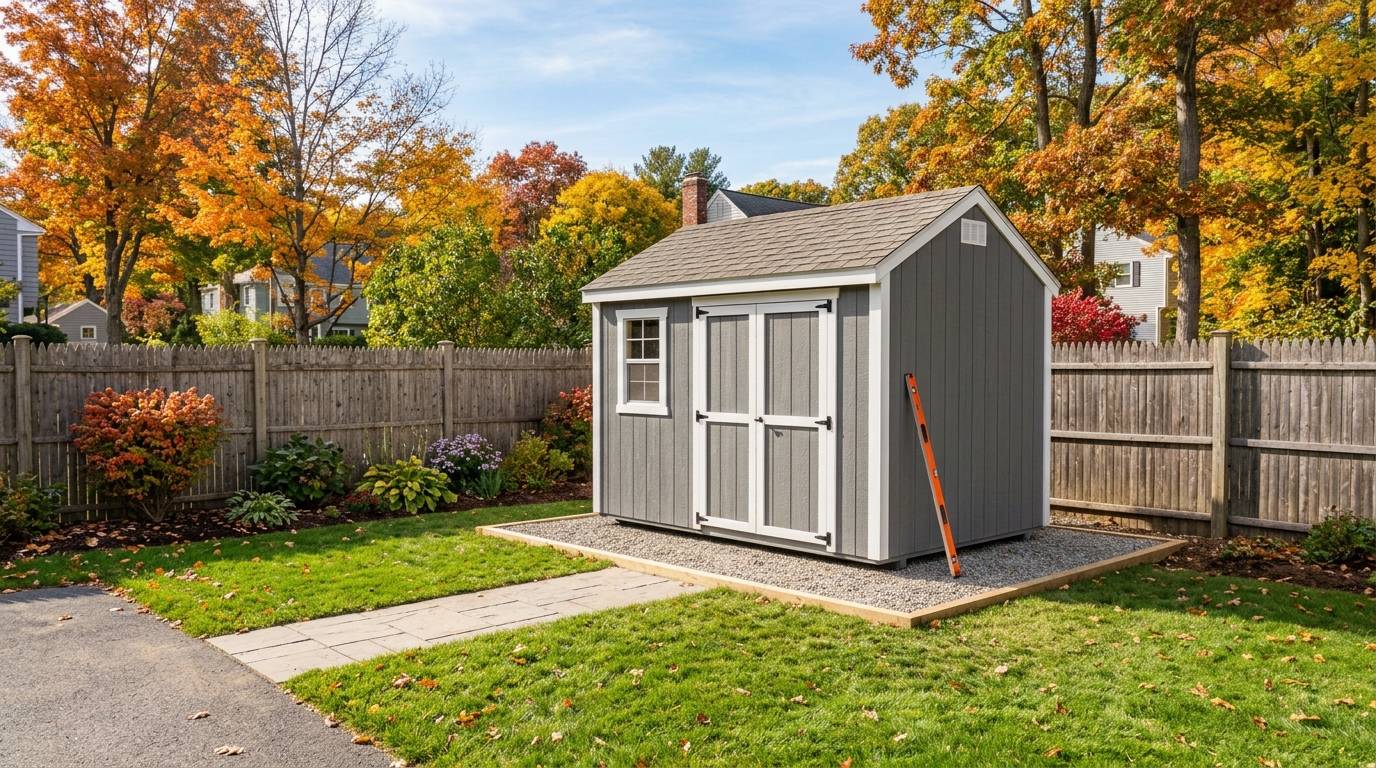
Buying a shed that arrives fully built saves you a weekend of assembly, but it adds one job: getting your yard ready for the delivery truck.
Most delivery problems start in the yard, not on the truck. A soft patch of lawn, a low branch, or a gate that is a few inches too narrow can turn delivery day into a reschedule. This checklist walks through what to do before the building arrives, and what to ask the dealer you buy from.
Quick Answer
To prepare your yard for shed delivery, confirm permits and setbacks with your local zoning office, choose a spot that is close to level and drains well, decide what the shed will sit on, and clear a route wide and tall enough for the delivery equipment. Then confirm the details with your dealer, since delivery distance, leveling, and rescheduling terms vary from one dealer to the next.
Step 1: Check Permits and Setbacks
Permit rules are set by your county, city, or town, not by the dealer. Call your local zoning office and ask three questions:
- Does a shed of this size need a permit?
- How far does it need to sit from property lines, the house, and other buildings?
- Are there height limits for accessory buildings?
If you live in a neighborhood with a homeowners association, check its rules as well. Ask your dealer whether it can provide a spec sheet with the building’s dimensions to include with a permit application.
Step 2: Choose the Spot
Look for ground that is fairly level and stays dry after a heavy rain. A shed set in a low spot sits in damp soil, and damp sheds invite mold, rot, and pests. Our guide to choosing a shed that stays dry and pest free explains why drainage matters.
Then think about how you will use the building. Point the doors toward the driveway if you will roll a mower in and out, or toward the garden if it will hold tools. Leave enough room to walk around all four sides for painting and repairs later. If you are still deciding on a size, SpaceFit suggests sizes based on what you plan to store, and our shed size guide covers how a building fits on a typical lot.
Step 3: Decide What the Shed Will Sit On
Portable sheds rest on treated runners, so most do not need a poured foundation. Common choices include:
- Bare ground, if the spot is firm and close to level
- Concrete or landscape blocks under the runners
- A compacted gravel pad, which helps rainwater drain away
- A concrete pad, for a firm, flat base
A gravel or concrete pad is a project of its own, so finish it before delivery day.
Step 4: Check How Level the Ground Is
Lay a long, straight board across the spot and set a level on top. Check side to side and front to back. Many delivery crews level the building with blocks on arrival, but each dealer sets its own limit on how much slope it will work with and who provides the blocks. If your yard has a noticeable slope, ask before you order.
Step 5: Clear the Route
Walk from the street to the spot the way the truck will travel. The truck, a tilt-bed trailer, and often a small machine called a mule all need to get through.
- Measure gates and any gaps between trees, fences, and buildings.
- Look up for low branches and wires.
- Trim branches and remove fence panels ahead of time. Do not count on the crew to remove obstacles.
- Mark septic tanks, sprinkler heads, and buried lines.
- Move vehicles, trailers, and outdoor furniture.
After a stretch of heavy rain, soft ground may not hold the truck until it dries.
Step 6: Confirm the Details With Your Dealer
Delivery terms differ from dealer to dealer, so ask these questions before you buy:
- How far will you deliver for free, and what does delivery cost past that?
- Does the crew level the building, and do you provide the blocks?
- How much clearance does the route need for this size?
- Will the driver call ahead on delivery day?
- How much notice do you need to reschedule, and is there a fee?
Many dealers on Sheds.store describe their delivery terms on their listings. If the details you need are not there, ask the dealer directly.
Delivery Day Checklist
- Permits and setbacks confirmed
- Spot chosen, close to level, with no standing water
- Base ready
- Route cleared, with branches trimmed and gates measured
- Septic tank, sprinklers, and buried lines marked
- Vehicles and furniture moved
- Phone on for the driver’s call
On the day itself, show the driver where the shed goes and which way the doors should face. Once it is set and level, you can start moving things in.
Frequently Asked Questions
Does my yard need to be perfectly level for shed delivery?
No. Many crews level the building with blocks, but each dealer sets its own limit. Ask your dealer how much slope it can handle.
Can a shed go directly on the ground?
Yes. Portable sheds rest on treated runners, and firm, level ground works. Blocks, gravel, or a concrete pad are also common.
How much does shed delivery cost?
It depends on the dealer. Many deliver free within a set distance of their lot and charge past that. Check the listing or ask the dealer.
What if the truck cannot reach my backyard?
Tell the dealer before you order. Measure your gates and clearances so you can share them.
Do I need a permit for a shed?
It depends on your city or county. Check with your local zoning office before you buy.
Once your yard is ready, compare sheds for sale from dealers near you, or find a dealer by ZIP code. If you have not settled on timing yet, see the best time of year to buy a shed.